Electric Co-ops Work to Restore Power as Massive Winter Storm Sweeps Across U.S.
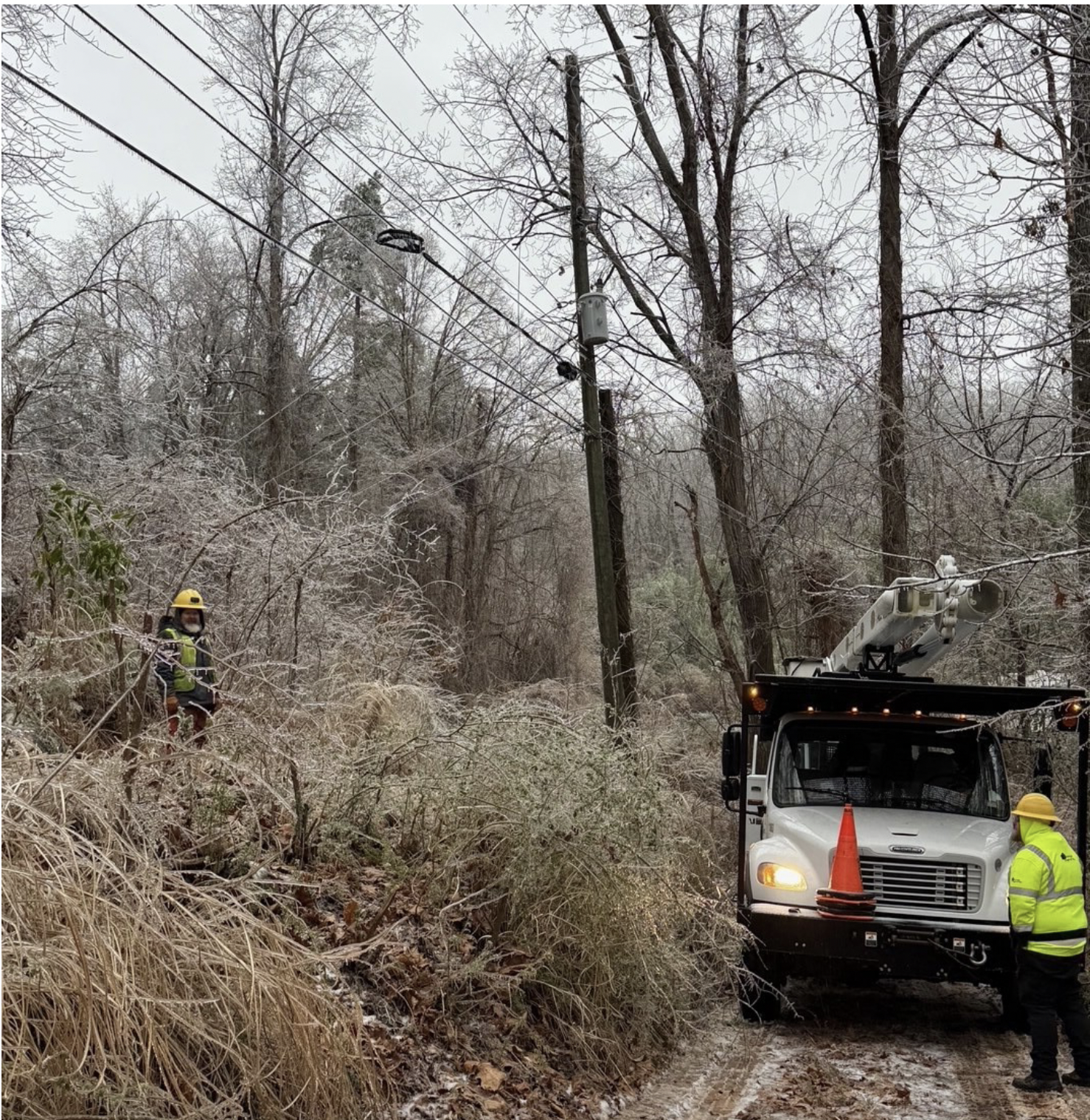
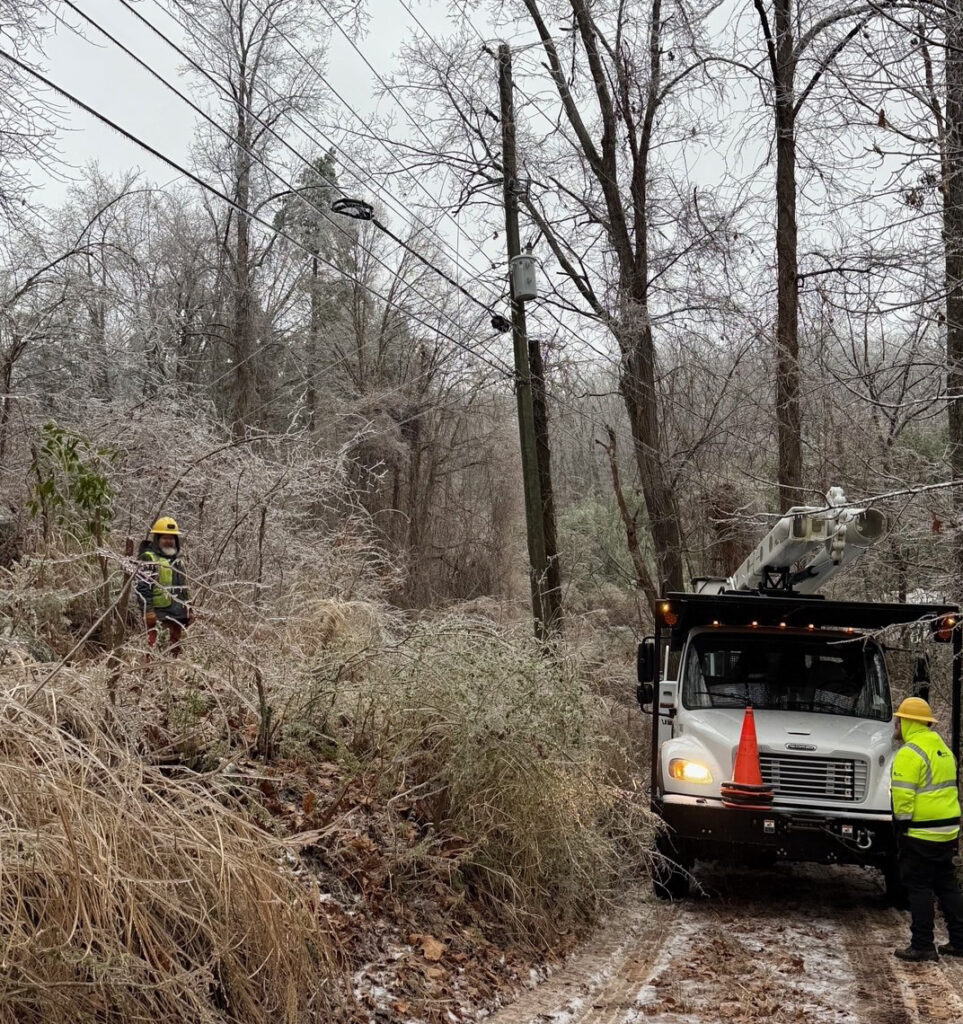
In Georgia, Habersham EMC crews were assessing damage and working to restore power as quickly as possible on Sunday morning. (Photo Courtesy: Habersham EMC)
Last Updated: Jan. 25, 6:30 p.m.
Electric cooperatives were working to restore power to about 400,000 consumer-members Sunday as a massive winter storm continued to blast heavy snow, ice and frigid temperatures across more than half the nation in what one co-op leader called “a slow-motion disaster.”
Ice accumulation is the biggest threat for electric co-ops as it snaps power lines and poles and topples trees into wires, causing outages that could last for days. Mutual aid crews from co-ops in less affected areas were rushing in to help those suffering the most.
More than 900,000 Americans were without power on Sunday evening, with outages especially high in the Southern states of Tennessee, Mississippi, Louisiana, Georgia, Texas and Kentucky, according to poweroutage.us.
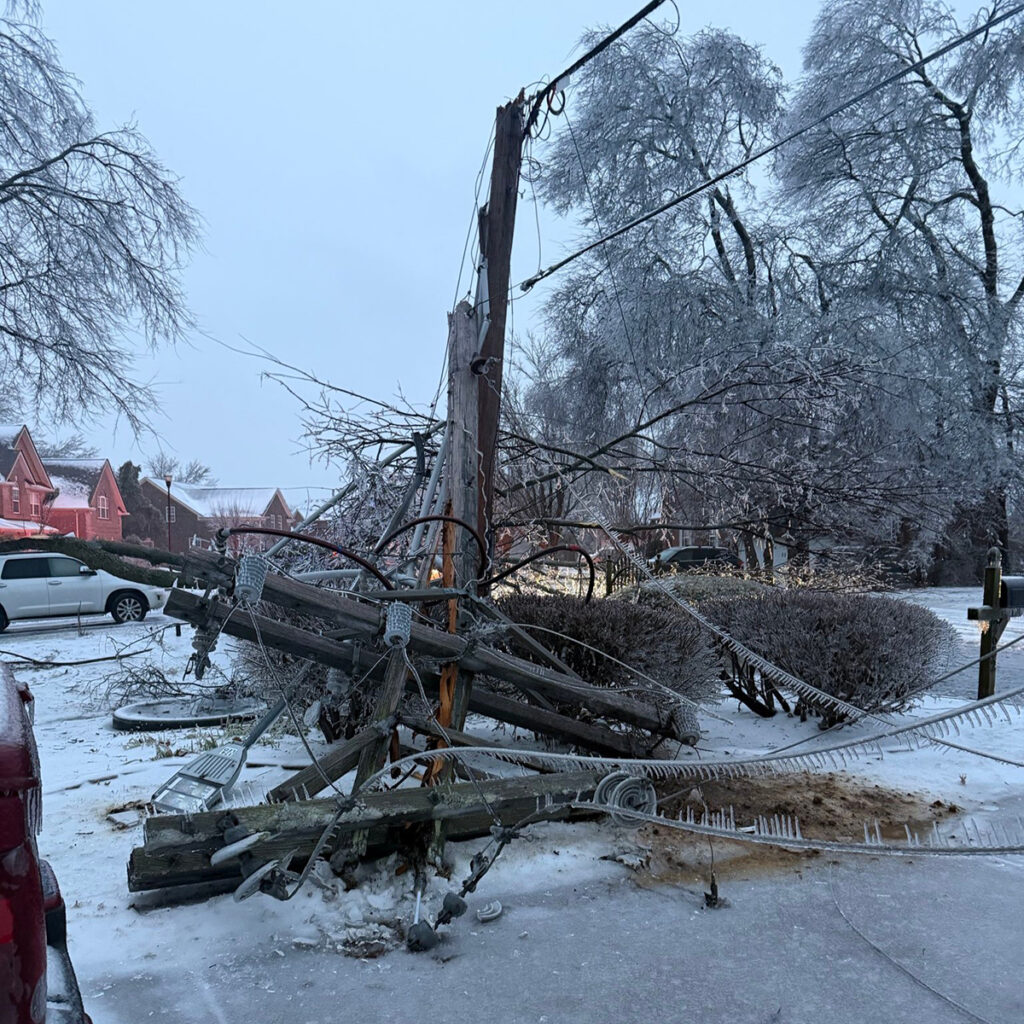
Mississippi co-ops were hit especially hard by Winter Storm Fern. More than 157,000 co-op members across the state had lost power as of 3 p.m., said Lydia Walters, vice president of the Electric Cooperatives of Mississippi. She cautioned that those numbers could change quickly as the storm continued to batter the state.
“Twelve electric co-ops have requested assistance from co-ops and contractors,” Walters said, adding that most of the damage was to co-ops in the northern part of the state. “Mutual aid from in state and out of state are answering the call.”
Kentucky Electric Cooperatives reported more than 60,000 co-op members without power as of about 5 p.m. Sunday, with final restorations expected to take more than a week. South Kentucky RECC had the most outages Sunday, with more than 21,000 of its nearly 71,000 members without power. The Somerset-based co-op has been through its share of natural disasters, having lost its headquarters to a tornado last year.
“Outages continue to steadily increase,” said Joe Arnold, vice president of strategic communications at KEC. He said it’s a dynamic situation, with power being restored to thousands of members before going out in other areas.
“Freezing rain/ice accumulation does not stop causing damage when the precipitation stops,” he said. “The weight on power lines and trees continues, so outages can still be triggered days after the weather event. Factor in wind gusts, and the cumulative effect is a slow-motion disaster.”
In Tennessee, co-ops were dealing with more than 85,000 outages.
Tri-County Electric Membership Corp. in Lafayette had more than 34,000 outages as of about 5 p.m. Sunday, out of more than 56,000 meters served. The co-op serves members in both Tennessee and Kentucky.
Middle Tennessee Electric Membership Corp. reported about 15,500 outages. The Murfreesboro-based co-op has more than 350,000 members.
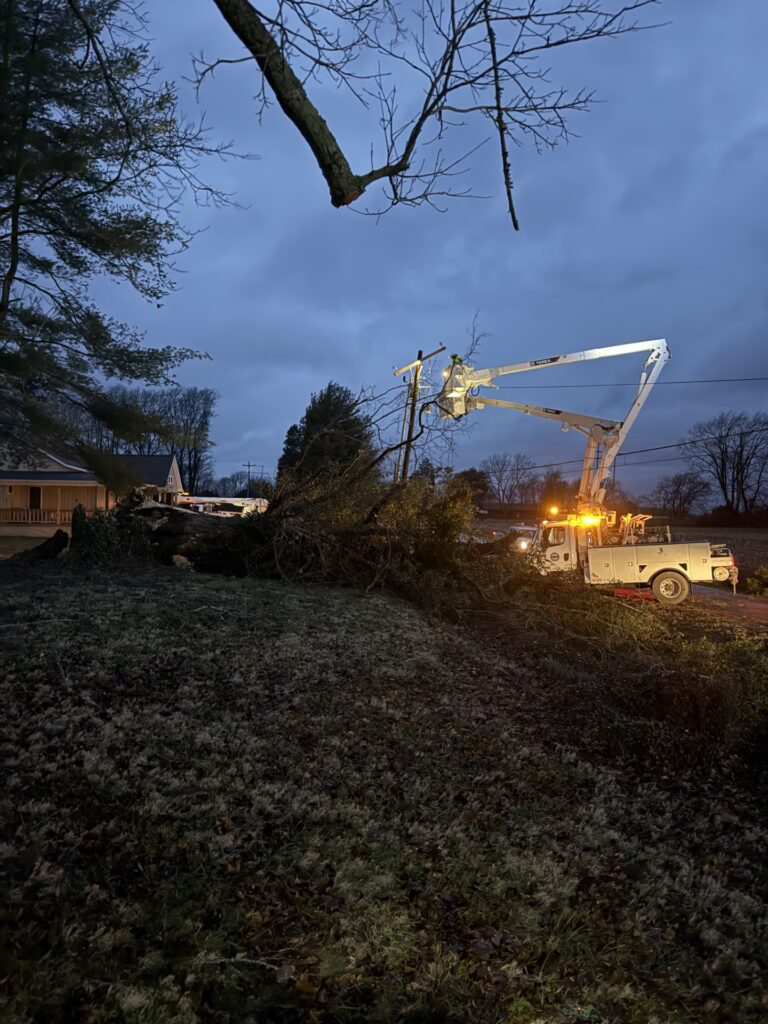
“Lord protect and bless our linemen and public service crews. So grateful for how they serve our community,” consumer Bella Savage wrote on the co-op’s Facebook page. Others chimed in with a chorus of “amens.”
Duck River Electric Membership Corp. in Shelbyville reported that more than 6,700 of its 85,700-plus members were without power as of Sunday evening.
Texas, one of the first states in the storm’s path, saw massive increases in outages overnight from Saturday into Sunday, with around 55,000 co-op outages as of Sunday afternoon.
Deep East Texas Electric Cooperative saw its outages swell from around 7,300 midday Saturday to more than 21,500 Sunday evening. The San Augustine-based co-op, which serves about 45,000 meters, was being helped by West Texas co-op crews providing mutual aid.
“Significant ice accumulation occurred overnight as expected, resulting in over 50% of the DETEC system to be without power,” the co-op wrote on Facebook. “DETEC is assessing damage and restoring power where it is safe to do so. Current conditions are dangerous and will slow restoration. Full restoration will be a multi-day event.”
Rusk County Electric Cooperative in Henderson reported that more than 8,000 of its nearly 24,000 members were without power as of Sunday evening, up from 6,500 the day before.
“This historic winter weather event has left a real mark on our community, and our hearts are with everyone experiencing damage, outages, or hardship right now,” the co-op said on Facebook.
“Please know our crews are working as quickly and safely as possible, alongside tree crews and first responders, to restore power and help our area recover. Our community is tough, and we’ll get through this together—one step, one repair, one neighbor helping neighbor at a time.”
In Georgia, there were more than 38,000 outages affecting co-op members as of 6 p.m. Sunday, according to Georgia EMC.
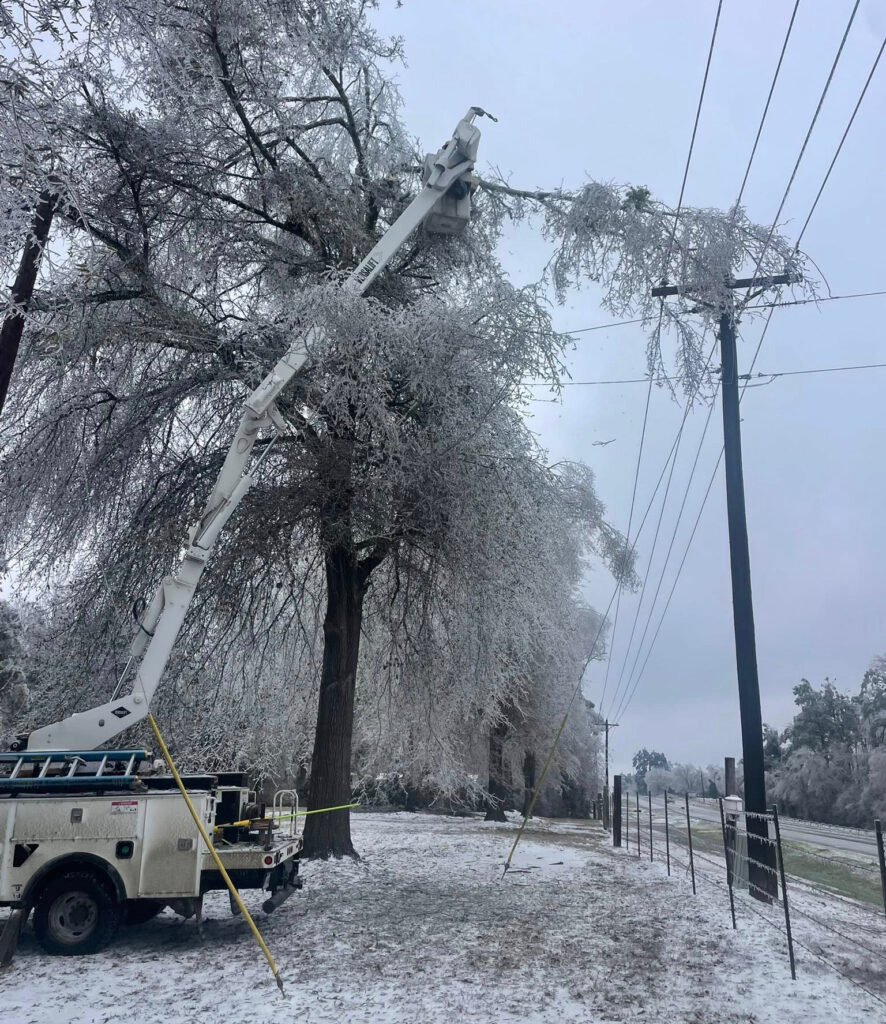
Habersham EMC in Clarksville reported more than 20,000 of its 38,000 members without power on Sunday evening.
“As temperatures continue to drop and daylight fades, conditions remain hazardous,” the co-op said on Facebook. “Freezing temperatures overnight may cause additional damage and could lead to extended outages … Our crews are out in the field and working around the clock as conditions allow to restore power safely.”
Georgia EMC said “EMC crews from Florida and southern Georgia were pre-positioned in impacted areas to assist in power restoration. In addition, EMCs that were initially in the storm’s path but remained unaffected are now mobilizing crews to assist the harder-hit areas.”
“During restoration, electric co-ops will follow standard utility practice in repairing and energizing lines by repairing feeder and primary lines first, then addressing secondary and service lines next. This method restores power to the greatest number of people in the shortest amount of time.”
In South Carolina, power was out to more than 25,000 co-op meters as of about 6:30 p.m., according to the Electric Cooperatives of South Carolina.
“The state’s electric cooperatives have mobilized roughly 1,400 lineworkers to respond to outages caused by Winter Storm Fern,” the statewide association said on its website. “These mutual aid workers consist of crews from South Carolina and at least seven states: Florida, Georgia, Indiana, Montana, North Carolina, Oregon and Texas.”
In Louisiana, outages were decreasing Sunday evening, with co-ops reporting less than 4,000 as of 5:30 p.m.